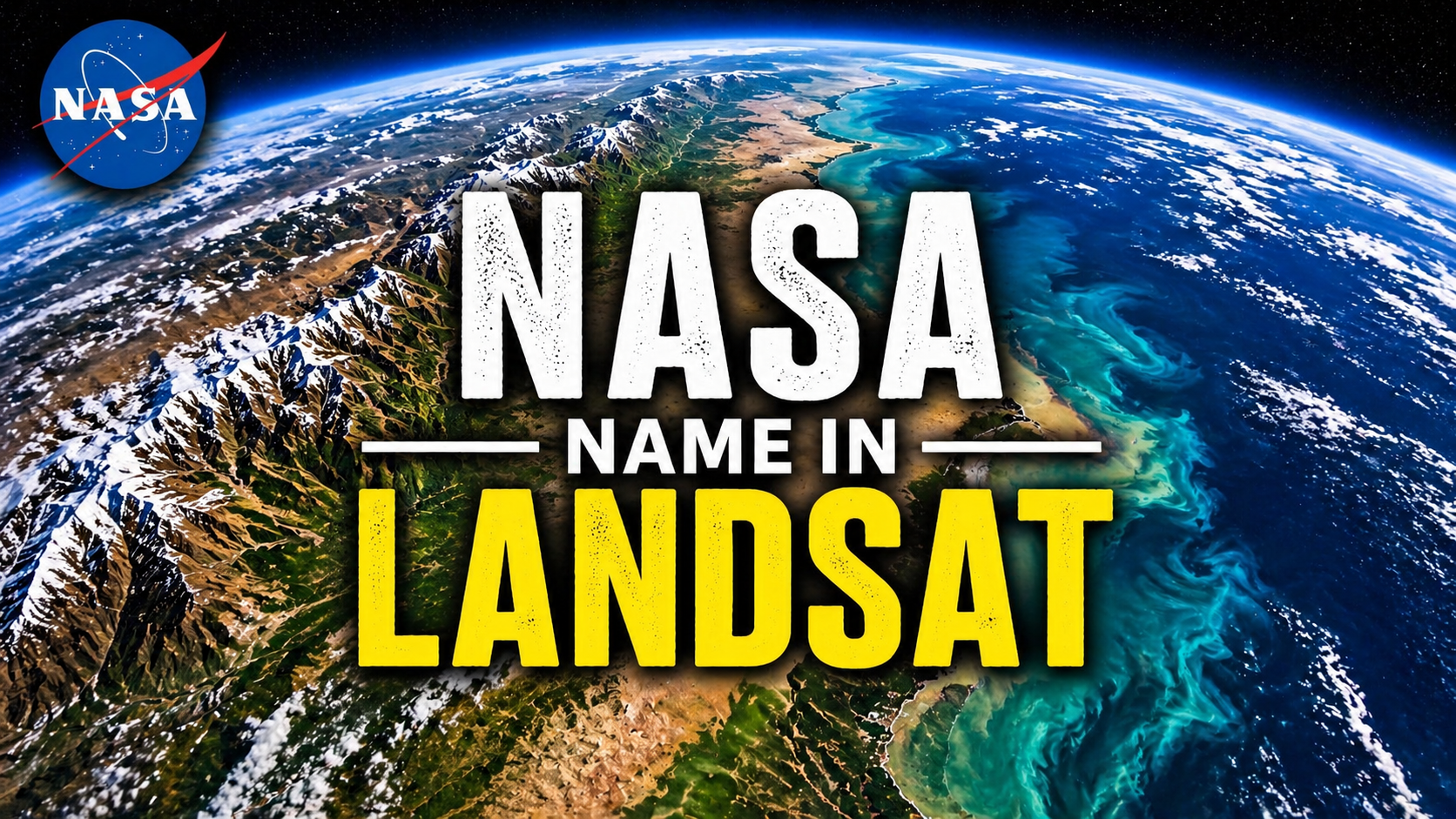
The Magic of Seeing Your Name from Space
Imagine looking at Earth from above and discovering your name written across vast landscapes. That’s exactly the kind of curiosity and creativity that “Your Name in Landsat” brings to life. Using satellite imagery from NASA’s Landsat Program, people are now exploring how personal identity can blend with science, geography, and digital art. It’s not just a concept—it’s a visual experience that connects you to the planet in a uniquely personal way.
Understanding Landsat and Its Global Vision
The Landsat Program is one of the longest-running Earth observation missions in history, jointly managed by NASA and United States Geological Survey. These satellites capture detailed images of Earth’s surface, revealing patterns in forests, deserts, rivers, and cities. When viewed creatively, these natural and urban formations can resemble letters, shapes, and even entire words.
Turning Geography into Personal Expression
The idea behind “Your Name in Landsat” is simple yet powerful. By identifying shapes in satellite imagery that look like alphabet letters, you can piece together your name using real locations from Earth. It’s like nature and human civilization have unknowingly written a global alphabet, waiting for you to discover it. Each letter becomes a place, and each place tells a story.
How Satellite Imagery Forms Letters
From winding rivers that curve into an “S” to city grids that form sharp “E” shapes, the possibilities are endless. Satellite imagery often reveals patterns invisible at ground level. Agricultural fields, coastlines, and even desert dunes can mimic the structure of letters, making the Earth itself a canvas of typography.
The Role of Technology in Creative Discovery
Modern tools like Google Earth and NASA Worldview make it easier than ever to explore Landsat data. With just a few clicks, users can zoom into different regions, adjust layers, and experiment with perspectives. Technology has transformed satellite data from a scientific resource into a playground for creativity and exploration.
Why This Trend Is Gaining Popularity
People are always searching for new ways to express themselves online. “Your Name in Landsat” offers something fresh, meaningful, and visually captivating. It’s not just about aesthetics—it’s about connecting your identity to the planet. In a digital world filled with repetitive content, this idea stands out because it feels personal and global at the same time.
Educational Value Behind the Creativity
Beyond its artistic appeal, this concept also introduces users to geography and environmental science. By searching for letter-like shapes, you naturally learn about different terrains, ecosystems, and regions. It’s a creative way to engage with Earth science without feeling like a lesson. In fact, it turns learning into an adventure.
Social Media and Viral Potential
Platforms like Instagram and Pinterest have played a huge role in spreading this trend. Users love sharing their customized name designs, often turning them into aesthetic posts, wallpapers, or digital art pieces. The uniqueness of each creation makes it highly shareable and engaging.
Challenges in Finding Perfect Letter Matches
While the concept sounds simple, finding perfect letter shapes in satellite imagery can be surprisingly challenging. Not every letter appears clearly, and sometimes you need to get creative with interpretation. This challenge, however, adds to the fun, making the final result even more rewarding.
Website Link
Future Possibilities of Personalized Earth Art
As satellite technology continues to improve, the resolution and variety of imagery will only get better. This opens the door to even more detailed and creative possibilities. Imagine animated names, interactive maps, or AI-generated suggestions for letter matching—all powered by real-world data.
A New Way to Connect with the Planet
“Your Name in Landsat” is more than just a trend—it’s a reminder of how interconnected we are with Earth. By turning landscapes into letters, it creates a bridge between personal identity and the natural world. It invites you to see the planet not just as a place you live, but as a canvas that reflects who you are.