Understanding the Art of Bike Editing
Bike editing is a blend of photography and digital creativity. It involves adjusting lighting, colors, shadows, and backgrounds to create a unique mood. Think of your bike as the hero of your story. The way you edit determines whether it looks like a racing beast, a vintage classic, or a futuristic machine. Every small detail—from color grading to highlights—plays a role in elevating the final image.
Choosing the Perfect Bike Photo
A great edit starts with a great photo. Clear lighting, sharp focus, and a strong composition are essential. Early morning or golden hour lighting works wonders, adding a natural glow to your bike. The angle matters too—low-angle shots can make your bike look powerful, while side shots highlight design details. Without a strong base image, even the best editing tools won’t deliver impressive results.
Color Grading for a Cinematic Look
Color grading is where the magic truly begins. Warm tones can give your bike a sunset vibe, while cool tones create a sleek, modern feel. You can experiment with contrast, saturation, and temperature to match your desired mood. Imagine turning a simple street photo into a moody night scene or a vibrant racing poster—this is the power of color grading.
Lighting Effects That Add Drama
Lighting can completely change the emotion of your bike edit. Adding artificial light flares, neon glows, or shadows can make your image pop. A subtle glow around the headlights or wheels can give a futuristic feel. Dramatic lighting effects are often used in professional edits to create depth and focus on the subject.
Background Manipulation Techniques
Why settle for a normal background when you can create something extraordinary? Replace dull backgrounds with mountains, cityscapes, or even fantasy environments. A bike parked on a regular street can be transformed into a scene from a racing game or a sci-fi movie. Background editing is one of the most powerful techniques to make your edits stand out.
Using Editing Apps Like a Pro
Modern editing apps have made professional editing accessible to everyone. Apps like Adobe Lightroom, Snapseed, and PicsArt offer tools for advanced edits. Learning how to use curves, selective adjustments, and blending modes can take your bike edits to the next level. The more you experiment, the more unique your style becomes.
Adding Motion and Speed Effects
Want your bike to look like it’s speeding even in a still image? Motion blur effects can create that illusion. By blurring the background and keeping the bike sharp, you can simulate high-speed action. This technique is especially popular for sports bikes and racing edits, making the image feel dynamic and alive.
Detail Enhancement for a Premium Finish
Enhancing small details like tires, engine parts, and reflections can make your edit look professional. Sharpening specific areas while keeping others soft creates depth. Highlighting chrome parts or adding reflections can give your bike a polished, premium appearance that grabs attention instantly.
Creating a Unique Editing Style
Every great editor has a signature style. Some prefer dark and moody edits, while others go for bright and vibrant tones. The key is consistency. When people see your edits, they should instantly recognize your style. This is what helps you build a strong identity on platforms like Instagram and Pinterest.
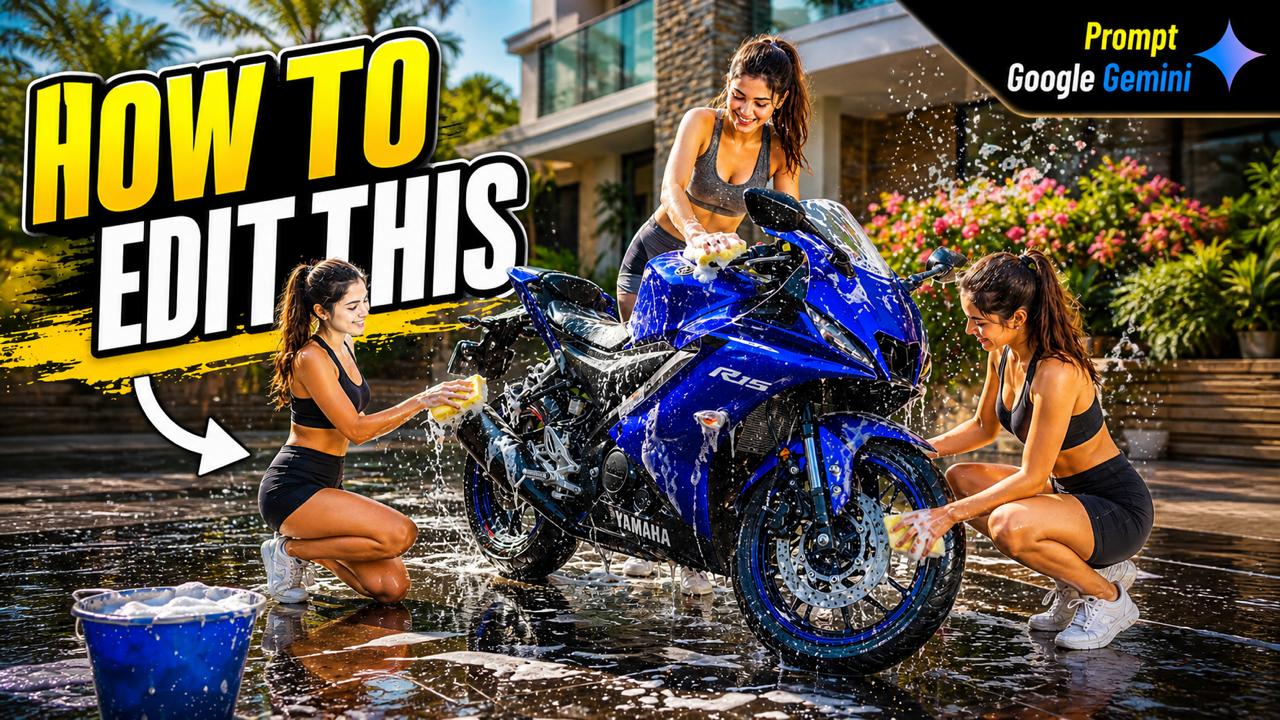
Prompt:
attractive young women washing a blue
Yamaha R15 sports bike in front of a
modern luxury house driveway, bright
sunny daytime, glossy wet marble ground
with water reflections, thick white soap
foam splashing everywhere, one woman
kneeling and cleaning the rear side panel
with sponge, one woman standing and
washing the fuel tank while smiling, one
woman crouching and scrubbing the front
wheel, sporty gym outfits (sports bras,
shorts, sneakers), ponytail hairstyles,
playful happy expressions, realistic body
proportions, highly detailed motorcycle
design, vibrant garden flowers and green
plants in background, luxury modern villa
with stone pillars and glass balcony,
cinematic composition, dynamic action
splashes, sharp focus, HDR lighting, ultra
detailed skin texture, photorealistic, 4K,
Prompt
Ultra-realistic lifestyle photo of three
DSLR quality, depth of field -ar 3:4
Optimizing Bike Edits for Social Media
Editing is only half the job—the final step is optimization. Make sure your image resolution is high and aspect ratio suits the platform. Add subtle branding or watermarks if needed. A well-optimized bike edit not only looks great but also performs better, gaining more likes, shares, and engagement.